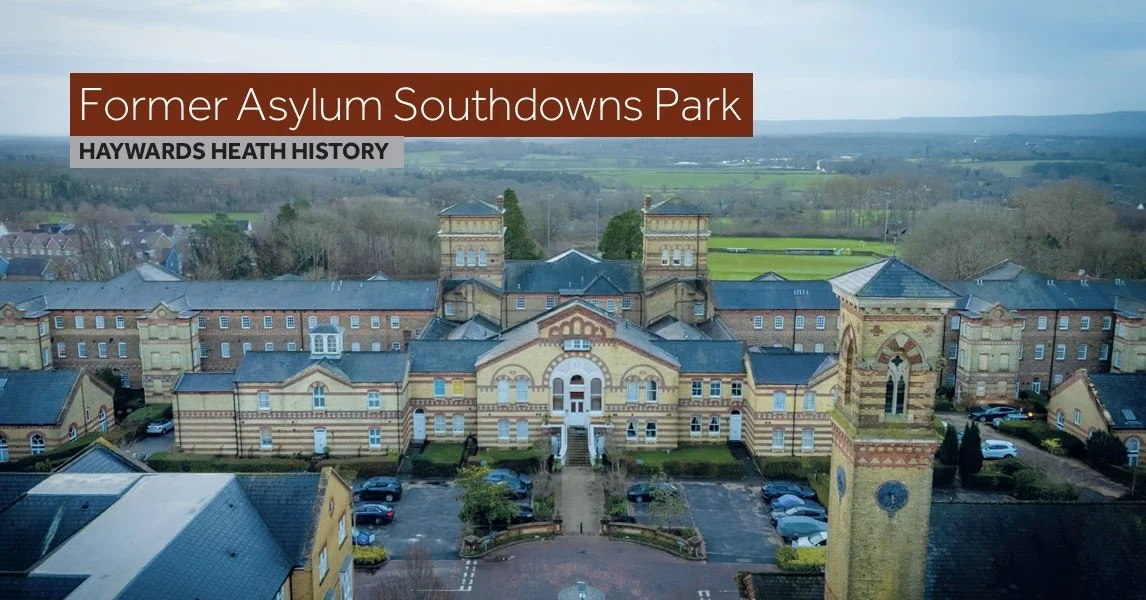
Southdowns Park in Haywards Heath is a beautiful development of private and social housing with flats and houses offering the last word in modern living and comfort. Complete with its own ghost, the Grey Lady, this wonderful Victorian Grade 2 listed building gazes comfortably on to the South Downs in the distance. Together with the coming of the railway in 1841 it forms part of the earliest roots of the town. Adding to its attractiveness are its summerhouses, beautiful secluded lawns, on-hand leisure facilities and social club. But the 19th century building had a very different beginning. Opened in 1859, as the Brighton Lunatic Asylum, it met the mental hospital health needs of the area as far south as Brighton until its closure in 1995. As building commenced in 1857 the site was a haven of activity. John Twistleton, local historian and author recalls that 200 builders arrived at the scene together with 20 temporary buildings and its own pub - the Asylum Arms - situated at the end of Asylum Road which is now Colwell Road.
Back in Victorian times the mental health emphasis was on placing those in need of psychiatric treatment in asylums. These large, often rambling institutions were built throughout the country to accommodate the mentally ill at a time when sufferers were viewed as lunatics and when intolerance was great. At that time lunatics were seen to be a nuisance as they interfered with life on the street, in hospital and in workhouses and were often locked up at home by their families who could not afford to pay for treatment in privately run asylums. The introduction of the 1845 Lunatics Asylums Acts required all counties in England to build asylums for their pauper lunatics but it wasn’t until 1859 that Sussex complied and became the last asylum to be built under the Act. Others were built after this, outside of the legal requirement, as overcrowding became rife.
Designed by architect H E Kendall Jnr., in 1856, building commenced in 1857 and opened in 1859, it was built to house 400 patients together with a church for 300 worshippers. It had many name changes over the years until it was finally named St Francis Hospital in 1948 after the church and the coming of the NHS. Complete with its own engine house, water supply, bakery, brewery, staff accommodation, farm and artisan workshops it resembled a small village – the total institution. Within a short number of years the initial population of 258 patients had almost doubled and the asylum was gradually extended until it eventually housed in excess of 1000 patients in the 1960s!
During the Victorian era treatment was based on moral therapy which emphasised the importance of a regular lifestyle, occupation, church attendance, fresh air and exercise. A daily allocation of beer must also have helped. There were few drugs in use at that time and access to the talk therapies lay very far in the distance. In addition, patients were often placed in seclusion in padded rooms and the hospital had as many as twelve of these at one point and still used two right up until the time of closure.
This was a period in the history of psychiatry when the medical superintendent reigned supreme. The f irst holder of the post at the asylum was Dr Lockhart Robertson. He was from a well to do family and, in the tradition of the great reformer Connolly at the time, practiced kindness and understanding towards the patients in his care. He promoted the use on non-restraint and ensured the asylum had a homely and welcoming feel about it. Although primitive now, he used wet packs in the treatment of the excitable phase of manic depressive (bipolar) illness. This involved wrapping the patient in wet sheets in bed which instilled hot sweats in the patient and allegedly caused the patient to be more relaxed. He was also the first medical superintendent in England to use Roman vapour baths in the treatment of depression and wrote in the Journal of Mental Science in July 1862, ‘Let the English public know that the revival of the bath in England is accompanied with the tonic and bracing practices of the early Roman bath and these prejudices will soon yield as the bath becomes a national institution in our towns, a necessary in our country houses and a therapeutic agent in every hospital in our land’.
The use of hot water, steam and air continues to be used therapeutically up to the present time when research suggests its positive benefits in counteracting loneliness and our leisure centres abound with its use in various formats.
Equally important in those days was the post of the hospital chaplain. The first of these at the hospital was the Rev. Henry Hawkins who often didn’t hit it off with Robertson but he was very popular with patients and staff but it is said his overt religiosity could be off putting. In addition to his religious responsibilities he communicated with patients’ relatives, introduced name plates on patients’ coffins, ran education classes for patients and staff at a time when educational opportunities were few and he also wrote the first eight annual asylum reports.
Back then staff discipline was harsh. There was a requirement to be in your room at night by a certain hour and a time to rise in the mornings. Lateness was punishable by fines.
As the decades moved on the incarceration of patients against their will diminished as legal provisions were introduced nationally governing patients’ status. In 1931 the new Mental Treatment Act allowed patients to be treated by certification or as voluntary or temporary patients. Then followed the 1959 Mental Health Act which ended these provisions by introducing informal admission status and admission for treatment and observation. Further 21st century provisions served to enhance patient care by safeguarding the rights of patients whilst allowing compulsory treatment where this was deemed medically necessary.
From having all wards locked initially these became unlocked as advances were made in medication and in legal provisions. But during the locked years a patient once made an impression of a staff key and fashioned a key of his own from a spoon from the cutlery stock. This can be viewed amongst the small display of St Francis Hospital artefacts at the Brighton Museum.
The 1950s was a time of radical change as new psychiatric drugs were introduced to treat mental illness and these substantially improved patients’ mental states. This in turn enabled more intensive rehabilitation to take place and, in a general sense, facilitated initial moves towards greater community care with initial moves towards this starting at St Francis Hospital in the 1960s and very much prior to eventual closure in 1995.
The 1960s saw the widespread use of physical methods of treatment such as Electroplexy (ECT), Leucotomy, Insulin Shock Treatment, Aversion Therapy and many more. These had been developing over the previous two decades but eventually their popularity waned, with the exception of ECT and its derivatives, as they were proven not to be curative and so were deemed to be of little value.
With the development of improved community care and continuing improvements in mental health legislation and the availability of treatment in clinics closer to home, the death knell of the Victorian asylums was inevitably sounded. This was aided by the continuing improvements in psychiatric drugs, the presence of more psychiatric nurses working in community and a much greater overall emphasis on rehabilitation and the talk therapies.
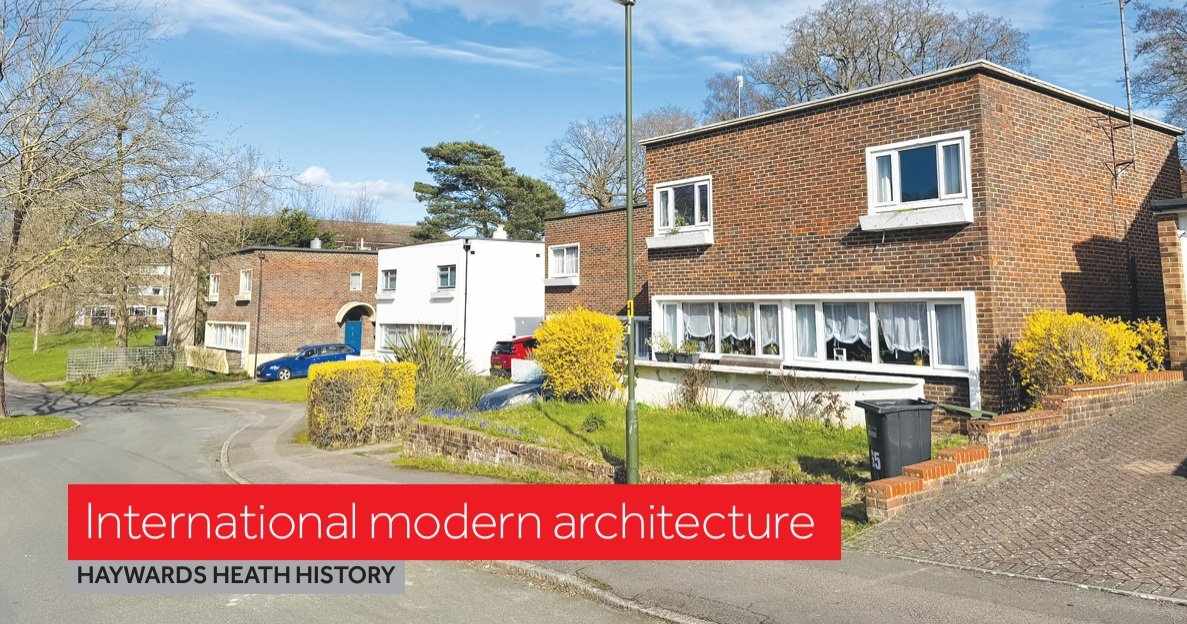
Throughout the 1960s and the following decades patient numbers at St Francis Hospital declined as improved community care became a reality. The hospital closed on November 17th 1995 and was sold for redevelopment for private and social housing. With the hospital’s redevelopment as Southdowns Park much new accommodation was tastefully added in keeping with the Venetian Italianate architectural design of Kendall’s original hospital which is well regarded architecturally as a handsome building,
When final closure was approaching an incident occurred which has gone down in the hospital’s folklore. Following a funeral service in the church the coffin of a former patient was being processed down the aisle but unbeknown to the congregation a patient from the hospital jumped into the hearse in an unguarded moment and drove it away. The long stay patient couldn’t drive and collided with an oncoming Rover with both vehicles leaving the road beside the former Royal Oak pub on the Ditchling Road. The patient was unharmed and the driver of the Rover was admitted to hospital but later discharged unharmed.
Whilst the provision of a fully funded, comprehensive, well-staffed and integrated psychiatric service remains unfulfilled we undoubtedly have witnessed enormous progress in the care and treatment of the mentally ill over the past 150 years. The lunatic has now become the service user with one in four of us requiring access to psychiatric treatment at some point in our lives.
Perhaps the voice of Dr Robertson rings through the corridors of Southdowns Park today echoing his words back in 1881 when in an address to the International Medical Congress he insightfully asked ‘whether the insane should be detained in asylums at all?’ We have come to realise that the Victorian asylums were not the answer but that the availability of mental health beds backed up with access to modern treatments within a comprehensive service which is sensitive to the needs of the user seems to be the way forward.
Joe has written extensively and gives regular walks and talks on the history of the former hospital, search for Friends of St Francis Hospital on Facebook.